Why does my electrical panel keep tripping breakers
Your breakers keep tripping because the circuit is overloaded, shorted, or the breaker itself has worn out. Here is how St. Cloud homeowners diagnose and fix it.
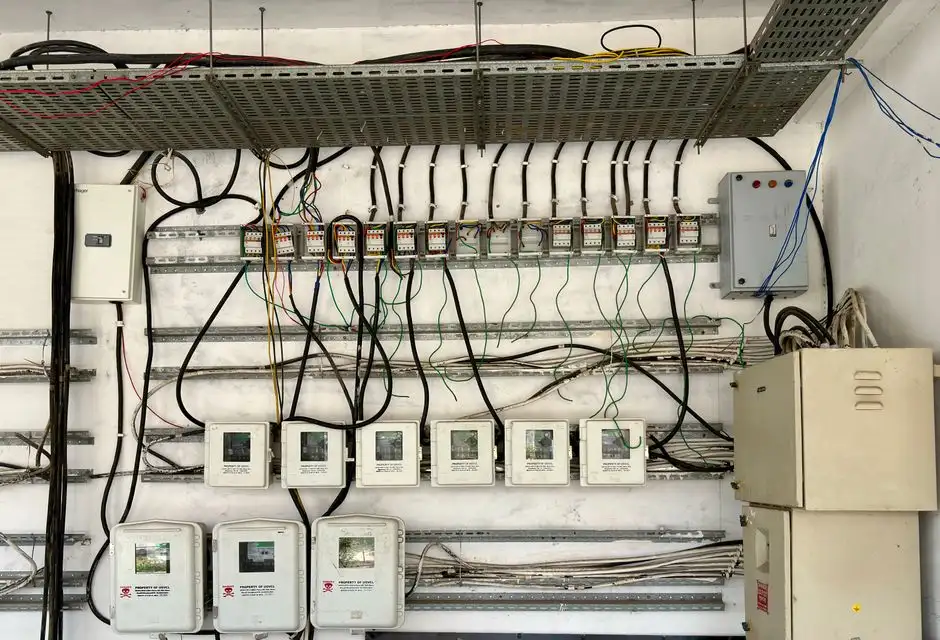
Your electrical panel keeps tripping breakers because a circuit is drawing more current than its breaker is rated for, or because a fault somewhere on that circuit is forcing the breaker to shut things down for safety. In St. Cloud, the three most common culprits we find are overloaded circuits from modern appliances, loose or corroded connections inside the panel, and breakers that have simply reached the end of their service life.
That answer covers the why. What follows is how to narrow down which of those is happening in your house, what it costs to fix in 2026, and when a tripping breaker is a genuine emergency instead of a nuisance.
What a tripping breaker is actually telling you
An electrical panel keeps tripping breakers St. Cloud FL is a safety device doing its job, not a malfunction. The breaker senses too much current and opens the circuit before the wiring behind your walls overheats.
Every breaker has an amperage rating - 15, 20, 30, or 50 amps on most residential panels. When the load on that circuit exceeds the rating for more than a few seconds, a bimetallic strip inside the breaker heats up and trips the switch. If there is a dead short, it trips instantly.
So the breaker is not the problem. The breaker is the messenger. Your job - and ours - is to find out what the messenger is trying to tell you.
The five reasons breakers keep tripping in St. Cloud homes
After enough service calls across St. Cloud and the surrounding Osceola County neighborhoods, the same five causes show up over and over. Here is what each one looks like.
1. Circuit overload
This is the number one cause, and it is almost always a modern load on old wiring. A 15-amp bedroom circuit built in 1995 was designed for a lamp, a clock radio, and a small TV. Today that same circuit runs a 1,500-watt space heater, two phone chargers, a gaming PC, and a hair dryer. That is 12 to 15 amps of steady draw, and any startup surge pushes it over.
Kitchen circuits trip for the same reason. A microwave, air fryer, and coffee maker on one 20-amp circuit will trip every time.
2. A short circuit or ground fault
A short happens when the hot wire touches the neutral or a grounded metal surface. A ground fault happens when the hot wire touches something grounded, like a metal box or a water pipe. Both cause an immediate trip - no delay, no heat buildup.
Common sources in St. Cloud homes: rodent-chewed wiring in the attic, a nail driven through a cable during a renovation, or a damaged cord on an appliance.
3. A worn-out breaker
Breakers are mechanical. After 15 to 20 years of tripping and resetting, the internal spring weakens and the contacts pit. A tired breaker will trip at 10 amps even though it is rated for 20. It may also feel loose when you flip it, or refuse to stay in the ON position.
If your panel is original to a house built before 2005, this is a strong candidate.
4. Loose connections
A loose neutral or hot wire at the breaker terminal creates resistance. Resistance creates heat. Heat causes nuisance trips and, in the worst case, a fire inside the panel. We find loose lugs on roughly one in four panels we open in homes older than 20 years.
5. A failing appliance
The breaker is fine and the wiring is fine, but the appliance on that circuit has an internal fault. A refrigerator with a failing compressor, a dryer with a shorted heating element, or an AC condenser with a bad capacitor will trip its dedicated breaker every time it starts.
Why does my electrical panel keep tripping breakers in St. Cloud FL?
St. Cloud has a few local factors that push panels harder than the national average. The biggest is age and load growth.
Large parts of St. Cloud - especially the older blocks near Electrical Panel Upgrade Replacement in Downtown St. Cloud - still have 100-amp service and original 1990s panels. Those panels were sized for a household with one refrigerator and no central AC. Today the same house runs a 3-ton AC, an EV charger, a tankless water heater, and a pool pump.
Second, summer. From June through September, Central Florida hits 95°F with high humidity, and AC compressors run 12 to 16 hours a day. That locked-rotor surge on startup is what trips a marginal breaker. If your lights flicker when the AC kicks on, that is the same underlying issue - we cover it in more detail on our flickering lights when AC starts St. Cloud FL page.
Third, lightning. Osceola County sees one of the highest lightning densities in the country. A nearby strike sends a surge through the utility lines, and a panel without whole-house protection takes that hit directly. Repeated surges degrade breakers and can weld contacts.
If you are not sure whether your panel is simply at capacity, our team can tell you in one visit. We handle electrical panel keeps tripping breakers St. Cloud FL calls every week, and we will tell you straight whether you need a repair or a replacement.
How to fix a tripping breaker in St. Cloud Florida
Fixing a tripping breaker starts with isolating the cause, then correcting it. Here is the process, from the simple checks you can do yourself to the repairs that need a licensed electrician.
What you can safely check yourself
- Identify which breaker trips. Write down the label and what is on that circuit.
- Unplug everything on that circuit. Yes, everything - including the surge strip behind the TV.
- Reset the breaker. Push it fully to OFF, then firmly to ON.
- If it holds, plug devices back in one at a time. The device that trips it is your culprit.
- If it trips with nothing plugged in, stop. That is a wiring fault, and it needs a professional.
What a professional repair looks like
When we get the call, we start with a clamp meter reading on the circuit under load. That tells us actual amperage versus the breaker rating. Then we check voltage drop at the panel and at the furthest outlet on the circuit - anything over 5% indicates a loose connection or undersized wire.
From there, the fix depends on what we find:
- Overloaded circuit: redistribute loads, add a dedicated circuit, or install a subpanel. A subpanel installation St. Cloud FL is often the cheapest way to add capacity without a full service change.
- Worn breaker: replace the breaker. A standard 20-amp breaker runs $15 to $40 in parts, plus labor.
- Loose connection: re-terminate the wire, torque to spec, and re-test.
- Failing appliance: we isolate the circuit and you call an appliance tech.
- Undersized service: if the panel is 100 amps and the house needs 200, no amount of breaker swapping will fix it. That is a service upgrade.
What it costs in St. Cloud in 2026
Typical 2026 pricing in this area breaks down like this:
- Diagnostic visit: $89 to $150, often credited toward the repair.
- Single breaker replacement: $150 to $350 installed.
- New dedicated 20-amp circuit: $350 to $650.
- Subpanel installation: $850 to $1,800.
- Full 200-amp panel replacement: $2,200 to $4,500, depending on permit, meter base condition, and whether the service drop needs work.
Same-day breaker tripping repair St. Cloud is available for most calls placed before 2 PM. Emergency breaker tripping repair St. Cloud runs after hours and on weekends at a higher rate.
Common mistakes we see homeowners make
The single most dangerous thing you can do with a tripping breaker is to upsize it. If a 15-amp breaker keeps tripping, installing a 20-amp breaker does not fix the problem - it removes the safety margin and lets the wire overheat. The wire in the wall is still rated for 14-gauge, and 14-gauge wire on a 20-amp breaker is a fire waiting to happen.
Other mistakes we run into:
- Holding the breaker in the ON position. If it trips again immediately, let it trip. Forcing it can weld the contacts closed.
- Ignoring a hot panel cover. If the deadfront feels warm, that is not normal. We cover that separately on our hot electrical panel St. Cloud FL page.
- Piling on power strips. Daisy-chaining two or three strips on one outlet does not add capacity. It adds risk.
- Assuming a new breaker fixes everything. If the underlying load or wiring is the problem, the new breaker will trip too.
- Putting off a panel replacement because it is not tripping today. Panels do not heal. They get worse.
When to call a professional
Call a licensed electrician the moment any of these are true: the breaker trips with nothing plugged in, you smell burning near the panel, the panel cover is warm or discolored, you see rust or scorch marks inside, or the breaker will not reset at all.
Those are not nuisance trips. They are signs of a fault that can start a fire.
St. Cloud Panel Works handles breaker tripping diagnostics, panel repairs, and full replacements across St. Cloud and Osceola County. We are a state-licensed electrical contractor, we pull permits when the job requires it, and we give you a flat price before we start. If your panel is beyond repair, we will show you why - not just tell you.
For homeowners in the neighborhoods south of 192, we also run regular service through Electrical Panel Upgrade Replacement in Southside St. Cloud, where a lot of the housing stock is hitting the 25-year mark on original panels.
Frequently Asked Questions
Why does my electrical panel keep tripping breakers in St. Cloud FL?
The most common causes are circuit overload, a short or ground fault, a worn-out breaker, loose connections, or a failing appliance. In St. Cloud specifically, older 100-amp panels running modern AC and EV loads are a frequent culprit. A diagnostic visit narrows it down in under an hour.
How much does it cost to fix a tripping breaker in St. Cloud Florida?
Expect $150 to $350 for a single breaker replacement, or $89 to $150 for the diagnostic alone. If the fix requires a new dedicated circuit, budget $350 to $650. A full panel replacement runs $2,200 to $4,500 in 2026.
Is a tripping breaker dangerous in St. Cloud?
A breaker that trips once under an obvious overload is not dangerous. A breaker that trips repeatedly, trips with nothing plugged in, or will not reset is dangerous. Those point to a wiring fault or a failing panel, and both can cause a fire.
How long does breaker tripping repair take in St. Cloud?
Most single-breaker repairs take 1 to 2 hours. A new dedicated circuit takes 3 to 5 hours. A full panel replacement is a full-day job, usually 6 to 10 hours, and requires a permit and a utility disconnect.
Can I fix a tripping breaker myself in St. Cloud FL?
You can safely reset a breaker and test which device is causing the trip. You should not replace a breaker, open the panel, or touch any wiring inside it. Florida requires a licensed electrician for panel work, and the risk of arc flash or electrocution is real.
Get help with Electrical Panel Upgrade Replacement in St. Cloud
If your breakers keep tripping, we can diagnose it, fix it, and tell you honestly whether your panel has more life left in it. We handle Electrical Panel Upgrade Replacement St. Cloud FL for homes and small commercial properties across Osceola County.
Call St. Cloud Panel Works at (321) 335-1162 to schedule a same-day diagnostic or an after-hours emergency visit.